 ElastaScan
Precision Muscle Activation Tracking
ElastaScan
Precision Muscle Activation Tracking
ElastaScan is a real-time, wearable muscle stiffness monitor designed to eliminate clinical subjectivity, optimize physical therapy outcomes, and accelerate athletic recovery.
Bridging clinical objectivity and individual recovery confidence.
Currently, physical therapists and athletic trainers must assess muscle activation and tissue stiffness using manual, subjective touch.
Patients are left entirely guessing whether they are targeting and contracting the correct muscle groups, leading to extended healing times, inflated clinical costs, and repeated reinjury.
ElastaScan was built under a single conviction: everyone deserves objective confidence in their recovery. By translating complex biological feedback into simple, clear quantitative metrics, we are replacing guesswork with technical certainty.
Our patent-pending solution continuously monitors real-time muscle stiffness parameters to ensure individuals engage targeted muscle groups exactly as prescribed.
A highly precise, non-invasive wearable solution built to quantify what is currently subjective.
Applies established clinical elastography and acoustic myography principles in a revolutionary wearable form factor. Multi-sensor array engineered for real-time tissue shear wave and transverse stiffness acquisition.
Translates mechanical deflection parameters into objective elastic modulus metrics. Validated at 92.41% accuracy in quantifying cross-bridge active tension against synthetic biological tissue baselines.
A patent-pending design that secures the sensor suite comfortably and precisely to individual targeted muscle groups for any movement range.
Drag the slider to perform a bicep curl. Experience how ElastaScan's sensor suite detects myofibrillar lateral expansion (volume conservation) and active muscle stiffness changes, translating them instantly into objective activation metrics.
Building credibility and securing validation from prestigious medical and regulatory bodies.
Includes private physical therapy clinics, university sports groups, and collegiate level athletic organizations.
Validated via the National Science Foundation (NSF) I-Corps program.
Validated via lab-controlled trials measuring physical tissue stiffness.
National recognition in top-tier engineering and business pitch competitions.
Won 1st place out of 200+ technology and student-led startup ventures at Texas A&M's premier entrepreneurship competition.
Selected out of 178 tech startups nationwide. Recognized as one of the Top 13 global public health entrepreneurial ventures in the country by the Center for Advancing Innovation.
Accepted into the prestigious Center for Advancing Innovation (CAI) incubator, backed by the White House, providing access to federal Economic Development Administration (EDA) funds and AbbVie product integration channels.
Stood 3rd out of 40+ highly competitive, multi-disciplinary engineering and scientific startup teams.
Pitched at the Shark Tank Open Call in Miami and represented Texas A&M University at the Consumer Electronics Show (CES 2024), establishing strong manufacturing links and clinical supply routes.
Bridging the gap between clinical medicine and high-fidelity biomedical engineering.
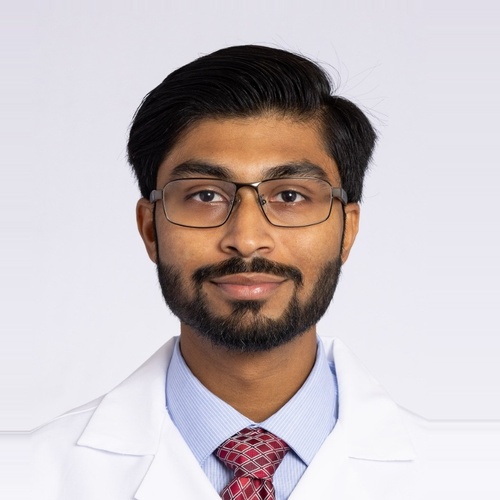
M.D. candidate at the Icahn School of Medicine at Mount Sinai and graduate of Biomedical Engineering from Texas A&M. Anish holds 3 patent-pending medical devices and has over four years of research experience in biosensors, biomechanics, and orthopedics. He has been recognized as a Clinton Global Initiative Fellow, a Rhodes Scholarship U.S. Regional Finalist, a Phi Kappa Phi Fellow, and one of the top 25 rising social entrepreneurs worldwide.
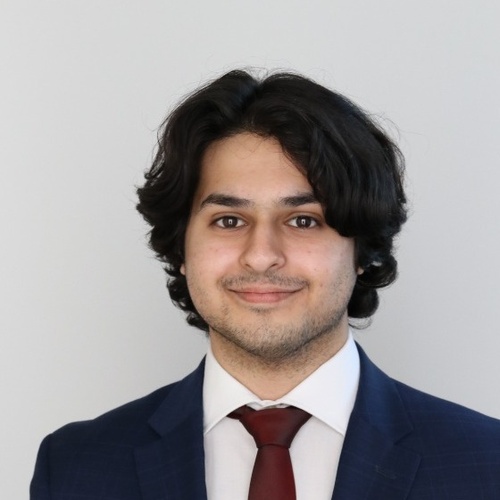
Genetics candidate at Texas A&M with extensive expertise in financial modeling, clinical research, and professional pitching. Spearheaded AegisArmor (a low-cost snakebite protection device) and co-authored extensive publications in neuroscience, cardiovascular health, and exercise physiology. He has collaborated with scientists at LSU and Texas A&M on cardiovascular research, translating genomic and physiological data into the foundational algorithms that power ElastaScan's diagnostic calibration.
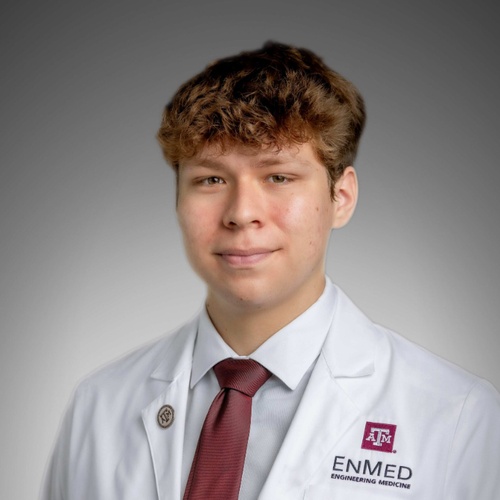
M.D./M.Eng candidate in the School of Engineering Medicine (EnMed) program (Class of 2029) and graduate of Biomedical Engineering from Texas A&M. Richard leverages extensive clinical networks, physician associations, and engineering resources via NSF I-Corps to bring ElastaScan to patient-centered care. Inspired by his own personal struggles with Osgood-Schlatter disease, he is deeply committed to eradicating musculoskeletal rehabilitation barriers by spearheading pilot deployments and clinical trials across physical therapy clinics in Texas.
Whether you represent an athletic organization, a physical therapy clinic network, or a strategic venture investor, we would love to connect and share more about our clinical validations.
Patent Pending · Full Ownership by Founders